😴 Sleep isn’t just “turning off”—it’s when your body and brain perform deep maintenance: repairing tissues, consolidating memory, balancing hormones, and recalibrating metabolism. For biohackers, mastering sleep is one of the highest-leverage tactics available.
Sleep optimization is the deliberate use of behavior, environment, nutrition, and technology to improve sleep quality, duration, and recovery, leading to better performance, health, and resilience.
1. How Sleep Affects the Body & Mind
Sleep isn’t “downtime.” Depriving yourself of quality sleep derails systems from glucose regulation to cognition.
🩸 Metabolism, Blood Sugar & Insulin Sensitivity
- Even one night of partial sleep restriction lowers insulin sensitivity by ~19–25% (i.e. you become more insulin resistant) in healthy adults. 👉Read the Study.
- Think of your muscle and liver cells as a locked door, and insulin as the key that unlocks it to let glucose (blood sugar) in for energy.
- When you are well rested: Your cells are highly “sensitive” to insulin. The key works perfectly. You eat carbs, your blood sugar rises a small appropriate amount of insulin is released, and it politely knocks on the cell’s door. The door swings open, glucose enters, and your blood sugar returns to normal.
- When you are sleep-deprived: Your body is in a stressed “fight or flight” state.
- Your body releases extra cortisol (a stress hormone), which tells your cells to ignore insulin and keep sugar in the blood for emergency energy. (fight or flight)
- Your cells become “groggy” and resistant.
- Now, when insulin knocks on the door, the cell doesn’t answer.
- Your pancreas, sensing the door isn’t opening, panics and release a flood of insulin to pound on the door and force it open to get the sugar out of your bloodstream.
- That drop in sensitivity means your pancreas has to work that much harder, and your body is flooded with a high, inflammatory, and fat-storing level of insulin just to handle the exact same meal you would have eaten on a good day.
- Over time, chronic sleep loss is associated with impaired glucose metabolism, higher risk of obesity, metabolic syndrome, and type 2 diabetes. PMC+2BioMed Central+2
- A 2-week sleep extension intervention in habitual short sleepers showed favorable changes in markers of glucose metabolism. JCSM
- There’s also a bidirectional effect: high blood sugar or glycemic variability can degrade sleep quality. PMC+1
🧠 Cognition, Mood & Brain Health
Deep (slow-wave) sleep and REM sleep contribute differently: deep sleep supports memory consolidation of detailed facts, while REM helps integrate and generalize information 👉Read the Study and Harvard Health: “Sleep-stages and memory”
Poor sleep elevates cortisol and impairs prefrontal cortex function, reducing focus, emotional regulation, and decision-making (see Harvard Health: “Sleep to solve a problem” ).
Long term poor sleep is associated with reduced regional glucose metabolism in the brain a marker linked to aging and neurodegeneration (see Poor Sleep Quality is associated with Decreased Regional Brain Glucose Metabolism in Healthy Middle aged Adults
🛡️ Hormones, Immunity & Repair
Growth hormone surges predominantly during deep sleep, playing a vital role in muscle repair, tissue regeneration, and fat metabolism. Adequate deep sleep allows for optimal anabolic signaling, supporting recovery and adaptation after physical stress. Conversely, sleep deprivation disrupts the endocrine balance, leading to elevated ghrelin (the hunger hormone), reduced leptin (which signals satiety), increased cortisol levels, and heightened production of inflammatory cytokines, all of which can impair recovery, promote fat storage and increase fatigue (The Open Respiratory Medicine Journal). During restful sleep, the immune system releases cytokines that help combat inflammation and infection, but insufficient or fragmented sleep reduces this cytokine activity, weakening immune defenses and delaying tissue healing.
2. The Stages of Sleep & Their Roles
Humans go through cycles of sleep stages roughly every 90 minutes, cycling 4–6 times per night. 👉Read the Study The main phases are NREM (non-REM) and REM, with NREM divided into three deeper stages.
Here’s a breakdown of how each stage contributes:
| Stage | Description / Physiology | Key Benefits & What Happens | When It Dominates |
|---|---|---|---|
| NREM Stage 1 | Transition from wakefulness to sleep — light sleep, brain waves slow, muscles relax. 👉Read the Study | Helps ease into sleep, sensory disconnection | Occurs early in cycles |
| NREM Stage 2 | More stable sleep, brain produces sleep spindles & K-complexes. | Memory processing, preparing body for deeper sleep | Largest % of total sleep |
| NREM Stage 3 / Deep (Slow-Wave) Sleep | Very slow delta waves, hardest to awaken. NCBI+2Sleep Foundation+2 | Growth hormone release, tissue repair, immune modulation | Dominates first half of night |
| REM Sleep | Brain activity resembles wakefulness, body paralyzed (to prevent acting out dreams). | Emotional regulation, memory integration, neural plasticity | More frequent nearer morning |
Important caveat: Sleep cycles evolve across the night. You start with more deep sleep early, shifting toward more REM later. Sleep Foundation+1
3. Sleep & Recovery for People Who Workout
For anyone who trains or exercises, deep sleep is not optional — it’s the foundation of recovery.
During deep sleep, muscle protein synthesis, cellular repair, bone remodeling, and anabolic hormone release are maximized. This medical text explicitly states that Stage 3 (deep sleep) “is the stage when the body repairs and regrows tissues, builds bone and muscle, and strengthens the immune system.” It also notes this is the most restorative stage, and when key anabolic hormones are released.👉Read the Study.
Inadequate sleep impairs glycogen replenishment, decreasing performance in subsequent sessions. This paper summarizes mechanisms by which acute sleep loss and short-term restriction impair glucose metabolism, insulin sensitivity, and skeletal muscle function — all relevant to recovery and substrate replenishment. PMC
Sleep loss increases injury risk, prolongs soreness, and reduces reaction times. According to the review from Sleep Foundation, lack of sleep adversely affected reaction time also in a studied group of male collegiate athletes.” Sleep Foundation
Many elite athletes use sleep tracking and recovery metrics (HRV, readiness scores) to modulate training load and optimize performance. This was a cluster-randomised controlled trial with professional endurance runners: one group used HRV-guided training (daily HRV morning measurement using rMSSD) and the other followed a traditional fixed training program. PubMed
Findings: The HRV-guided group achieved greater increases in maximal velocity (P = 0.027, effect size d = 0.66) compared with the traditional group.
Interpretation: Using HRV to guide training load (i.e., adjusting intensity/volume based on daily physiological readiness) appears to yield better adaptation in performance metrics. 👉Read the Study
4. Major Contributors to Sleep Quality
If you want better sleep, address these critical levers:
🌞 Light & Circadian Inputs
- Morning sunlight exposure helps anchor your circadian rhythm and signals wakefulness. By getting that morning light, you are creating a strong “wake up” signal (cortisol) and simultaneously setting the timer for a strong “go to sleep” signal (melatonin) later that day. This creates a robust and stable sleep-wake cycle, which is what “anchoring your circadian rhythm” means.
👉Read the Study - Evening blue light (from screens) suppresses melatonin and delays falling asleep. Researchers found that exposure to standard room light before bedtime “exerts a profound suppressive effect on melatonin levels” and shortens the body’s internal signal of night duration, delaying the circadian clock. 👉Read the Study
- Gentle red or amber light can support a wind-down phase. This WebMD review explains that to improve sleep, you should “use dim red lights for night lights,” as red light is “less likely to shift circadian rhythm and suppress melatonin.”
🌡️ Temperature & Thermoregulation
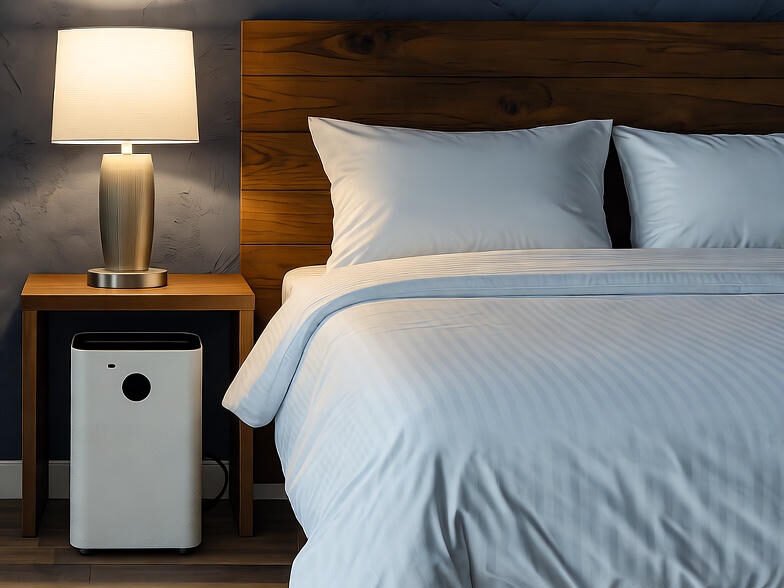
Optimizing your sleep involves regulating your circadian rhythm through two key environmental cues: light and temperature. Morning sunlight exposure is essential for “anchoring” your clock, signaling wakefulness and setting a timer for sleep later that night. Conversely, evening blue light from screens suppresses the sleep hormone melatonin, delaying sleep, which is why non-disruptive red or amber light is preferable for a wind-down phase. Similarly, your body’s core temperature must drop to initiate and maintain sleep, a process that is supported by a cool bedroom (around 18-19°C / 65-67°F) and can be interfered with by an environment that is too warm.👉Read the Study
🔇 Noise, Air Quality & Environment
- Even minor noises can fragment sleep architecture.
- Use white noise machines, fans, earplugs, or noise-canceling devices.
- Poor air quality (CO₂, allergens) can cause micro-arousals — consider air purifiers.
🧠 Stress & Autonomic Tone
- Elevated evening cortisol or sympathetic nervous system activity delays sleep onset. Practices like box breathing, meditation, journaling, or gentle stretching can help shift to parasympathetic (rest) mode. A key randomized controlled trial published in Clinics (a Brazilian medical journal) investigated the effects of resistance exercise and stretching on patients with chronic insomnia. They were split into three groups: a resistance exercise group, a stretching group, and a non-exercise control group. The stretching group performed 60-minute sessions three times a week for 4 months. Findings: Compared to the control group, the stretching group showed significant improvements in –
- Reduced Insomnia Severity: Their scores on the Insomnia Severity Index (ISI) dropped significantly.
- Less Time Awake: They had a large decrease in “wake after sleep onset” (waking up in the middle of the night) and a moderate decrease in “sleep onset latency” (the time it takes to fall asleep).
- Conclusion: The study concluded that both stretching and resistance exercise were effective non-pharmacological interventions for improving objective and subjective sleep quality in insomnia patients.👉Read the Study.
🕰️ Routine & Consistency
Reinforcing your circadian alignment by going to bed and waking up at fixed times is essential, but this rhythm can be easily disrupted by what you consume. Caffeine, for example, should be avoided late in the day, as its long 5–8 hour half-life can linger well into the evening. While alcohol might seem to help you fall asleep faster, it actually fragments crucial REM and deep sleep later in the night. Likewise, eating heavy or high-sugar meals too close to bedtime can interfere with rest by causing metabolic disturbances, acid reflux, or an unhelpful rise in your body temperature.
⚡ Training & Timing
- Intense late-evening workouts may raise body temperature and activate sympathetic drive — try to complete strenuous sessions 2–3 hours before bed.
- Also light activity like walking or mobility work can help with sleep onset
5. Foods & Supplements That Help or Hinder Sleep
✅ Sleep-Supporting Foods & Nutrients
- Tryptophan rich foods (turkey, seeds, oats) and L-tryptophan supplementation. Can lead to better sleep: Tryptophan → 5-HTP → Serotonin → Melatonin. A 2021 meta-analysis published in Nutrition Reviews looked at multiple studies on L-tryptophan supplementation.
- The Finding: The analysis concluded that tryptophan supplementation (especially at doses of 1 gram or more) significantly improves sleep quality. The most notable effect was a reduction in “Wake After Sleep Onset” (WASO) meaning people who took it spent less time awake in the middle of the night. This is the most important finding from the research. You might think eating a high-tryptophan food like turkey or chicken would be the best way to get this benefit, but the opposite is often true.
- The Problem: Tryptophan-rich foods (meat, dairy, nuts) are also rich in other “large neutral amino acids” (LNAAs).
- The “Competition”: All of these amino acids compete for the same “transport system” to cross the blood-brain barrier. Because tryptophan is usually present in smaller amounts than the other LNAAs, it “loses” the competition, and very little of it actually gets to your brain.
👉Read the Study. - Magnesium (leafy greens, nuts) and Magnesium supplements supports relaxation and GABA function.
- Low-glycemic, moderate-carb dinners may support insulin balance and facilitate melatonin.
- Herbal teas like chamomile or “sleep blends” (e.g. valerian, passionflower) are used traditionally.
⚠️ Foods & Substances That Disrupt Sleep
- Caffeine — even afternoon intake can reduce REM and deep sleep.
- Alcohol — disrupts sleep architecture (less deep/REM, more awakenings).
- Large or fatty meals close to bed — increase metabolic load, body temperature, and disturb digestion.
- High-sugar or high-glycemic snacks late at night may spike glucose and insulin, interfering with sleep stability.
💊 Supplements (Educational, Evidence-Informed)
- Magnesium glycinate (magnesium bisglycinate clinical name)— often recommended for its calming effects.
- L-Theanine and L-tryptophan— are both amino acids that are both clinically proven to help people get a better night’s rest.
- Melatonin — effective for short-term circadian shifts (jet lag, shift work). The general expert consensus is that melatonin is a safe tool for short-term resets (like jet lag) or for a few weeks to get your sleep schedule back on track. It is not intended to be a nightly supplement taken indefinitely.
- Glycine — is a emerging compound under study in the longevity & neurohacking space. Polysomnography (a clinical sleep study) showed that the glycine group fell asleep faster (reduced sleep onset latency) and reached deep sleep (slow-wave sleep) more quickly without changing the overall sleep structure.👉Read the Study
Always recommend consult with a medical professional before using supplements, especially with medications or health conditions.
6. Sleep-Tracking Gadgets & Wearables
Measuring sleep is key — you can’t optimize what you don’t track. These are some of the leading tools in the biohacking space:
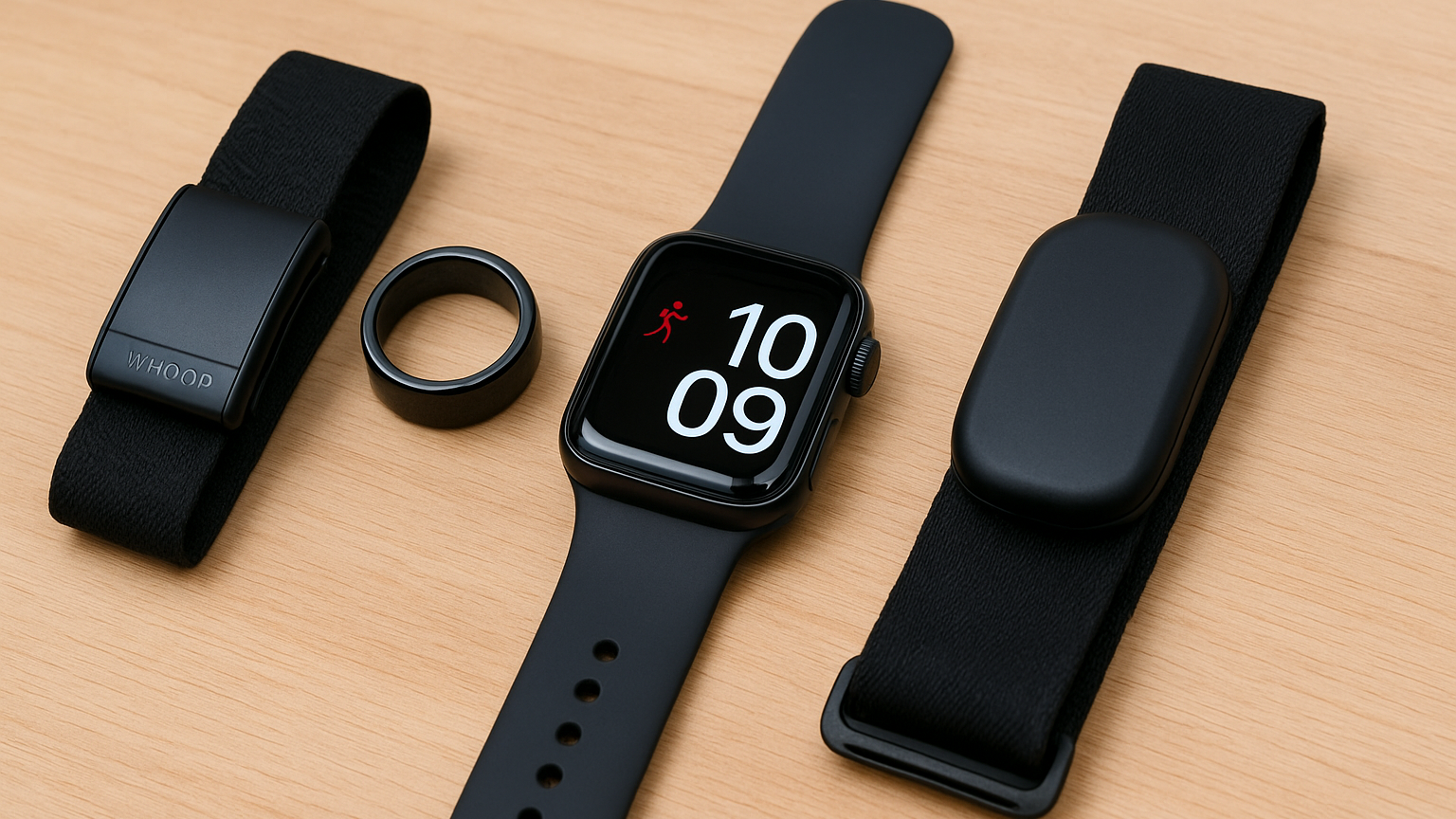
- WHOOP Strap — emphasizes recovery, strain, and readiness metrics.
- Fitbit / Apple Watch — widely accessible and improving in sleep analytics.
- Eight Sleep Pod / Sleep Cover — for active thermal regulation during the night.
- Blue-light blocking glasses, air purifiers, can all help to make you feel sharp and refreshed in the morning.
- Oura Ring – Industry leading smart ring that measures heart rate variability (HRV), skin temperature, respiratory rate, and provides a readiness/sleep score. Great for longitudinal trend tracking.
7. How to Turn Sleep Data Into Actionable Improvements
Many collect data — few translate it into change. Here’s how to convert sleep metrics into progress:
- Identify consistent patterns, not one off nights.
- Cross reference poor nights with variables. Hot room temperature, late workouts, heavy dinner, late night blue light, stress.
- Run small experiments: e.g. shift dinner earlier, add 30 min wind-down, reduce room temp, morning workouts, try blue light blocking glasses.
- Watch your. Heart Rate Variability (HRV) resting heart rate, sleep staging trends, and subjective metrics (mood, energy).
- Adjust and repeat. As your body gets better, keep testing new tweaks.

9. Conclusion & Key Takeaways
- Sleep impacts metabolism, cognition, repair, immunity, hormonal balance — it’s a master lever in biohacking.
- Understanding sleep stages allows you to appreciate why certain nights feel more restorative.
- For those who train, sleep is when gains are cemented — you cannot out-train poor sleep.
- Address your environment, behaviors, and physiology in synergistic fashion.
- Use tracking not for obsession, but for insight. Small, consistent improvements compound over time.
- Sleep optimization is not a hack; it’s foundational strategy.
Author
Phil | Recover Restore
Founder of Recover Restore, a biohacking & wellness platform dedicated to bridging science and real-world performance. Phil experiments with evidence-based strategies and shares what works — one human upgrade at a time.